Donkey River Farm
The Family Cow — Complete Care Guide
The Family Cow — Complete Care Guide
Couldn't load pickup availability
The complete family milk cow care guide — from choosing her to calving
Most people who struggle with a family milk cow didn't lack heart. They lacked information nobody handed them.
The person who sold them the cow assumed they already knew. The internet gave them nine contradictory answers. And by the time something went wrong, they were searching at 2 a.m. with a sick animal in the barn.
This is the guide for the person doing it without a mentor down the road. It covers the whole year of family cow care in eleven parts — what to do, why it works, and where the line sits between "I can handle this" and "call the vet right now."
What's inside
Before you buy a milk cow — breed comparisons, what to check on her udder and feet, which disease tests to require, and when to walk away from a cheap cow.
Feeding a milk cow — how a rumen actually works, complete hay budgeting with real bale math, round bales, rodent-proofing your feed, minerals most homesteads get wrong, and body condition scoring.
Daily care and grooming — brushing, hoof care, fly and parasite control, and the five-minute daily check that catches almost everything early.
Milking and udder care — the hygiene routine that prevents most mastitis, hand milking versus machine, milk filtering and handling, and how to dry a dairy cow off correctly.
Testing you can do yourself — California Mastitis Test, milk culture, fecal egg counts, pregnancy testing, and ketone testing for fresh cows.
Vaccines — what's available, what's legally required in some states, and how to make the decision with your own vet.
Holistic versus conventional care — honestly evaluated, including which popular natural remedies have real evidence behind them and which don't.
Calving — preventing milk fever, using CMPK safely, recognizing normal presentation, and how to assist a birth without injuring her.
When something goes wrong — a triage table you can scan in a panic, plus the annual calendar and the emergency kit to assemble before you need it.
Why this milk cow guide is different
It tells you why, not just what. When it explains why you keep calcium low before calving, or what's actually happening inside an infected quarter, that comes from someone who taught the underlying science to college students.
It also refuses to pick a team. Prevention and good husbandry keep a cow from getting sick better than any drug does. Veterinary medicine saves a cow already in crisis better than any herb does. This guide is clear about which situation is which — including where the natural-versus-conventional argument has cost cows their lives, in both directions.
Who wrote it
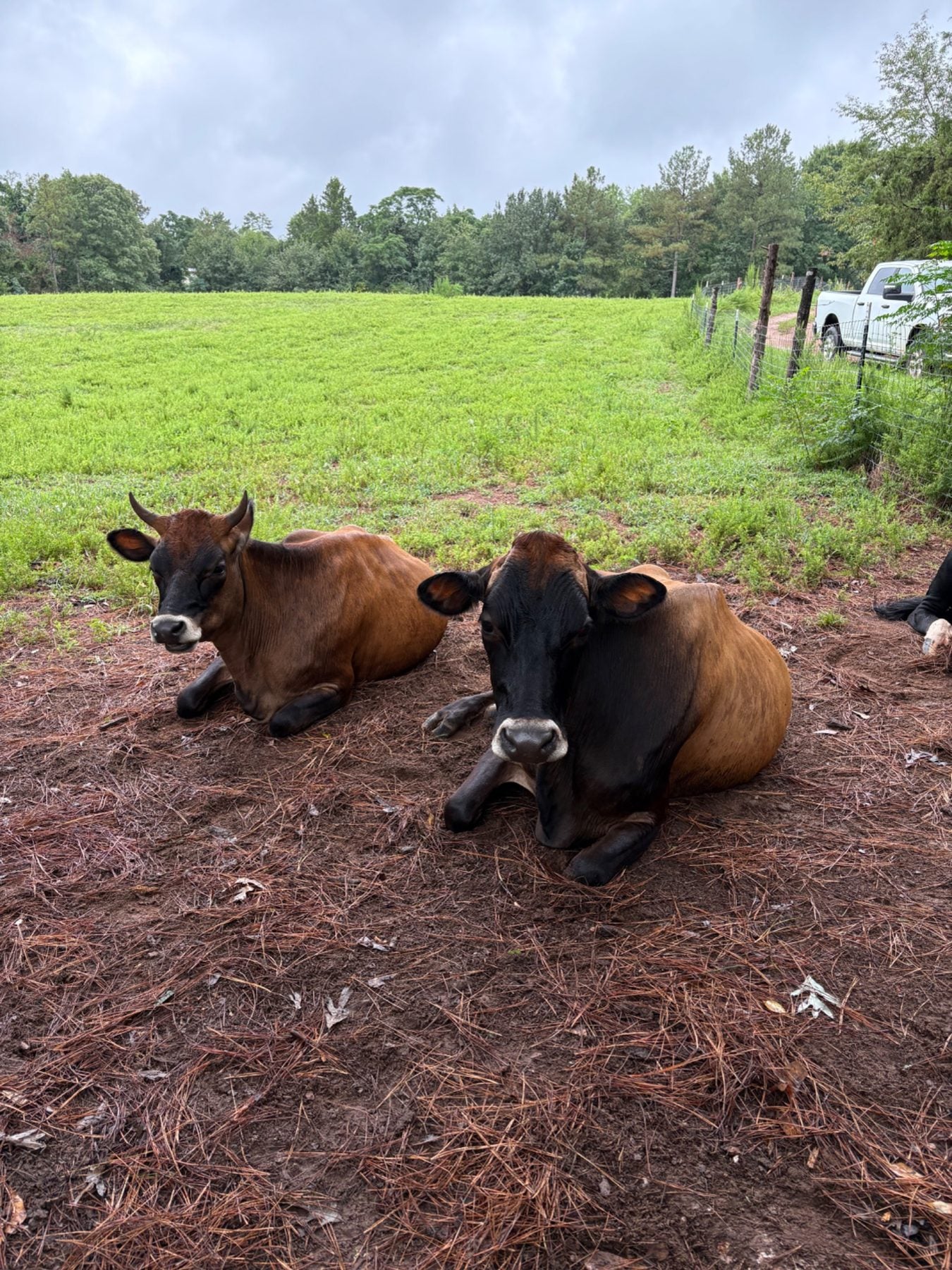
Morgan, co-owner, of Donkey River Farm in Liberty, South Carolina — M.S. in Molecular Biology, B.S. in Animal Science, and seven years teaching microbiology, molecular biology, and anatomy at the collegiate level. She also operates a DNA testing lab and milks her own Jersey cows.
Frequently asked questions
Is this for beginners? Yes. It assumes no prior experience and explains the reasoning behind every practice, but it goes deep enough to stay useful in your third year.
What format is it? An instant-download PDF. Read it on a phone, tablet, or computer, or print the whole thing for the barn.
Does it cover holistic care? Thoroughly — and honestly. Natural prevention is where this guide spends most of its energy, alongside a clear-eyed section on which remedies hold up under testing and which don't.
Does it cover calving? Yes. Milk fever prevention, CMPK use, presentation, when to intervene, how to pull a calf safely, and the calf's first minutes.
Will it work for a Jersey, a Dexter, a Guernsey? Yes. Breed comparisons are included, and feed and care figures scale by body weight.
Share